
If you’ve ever taken a screenwriting class or read a book on the craft, you’re probably familiar with the adage “show, don’t tell”. We know it’s better to display information than to simply explain it. This can be a surprisingly challenging concept to understand. Start by thinking about it like this, you’re simulating the visual medium instead of simply working in it.
“Show, don’t tell”
is not important because it forces writers to be creative with the ways they deal out information, but because of the way audience accepts information. When you tell the audience information, or when characters just spout exposition, you succeed in getting information across but nothing more. There is no emotional connection. When you show information, the audience doesn’t just learn, they FEEL the experience of the story. Good execution demands the audience to latch into new information in a way they wouldn’t have been able to before. It creates an emotional connection the audience carries through the rest of the viewing, allowing payoffs to feel rewarding.
There is no point in the script where the “show, don’t tell” rule is more important than in protagonist’s introduction. It’s where we first meet our hero. It’s vital to establish an emotional connection between characters and audience before they share an adventure. So, let’s explore a movie that displays a flawless execution of visual exposition.
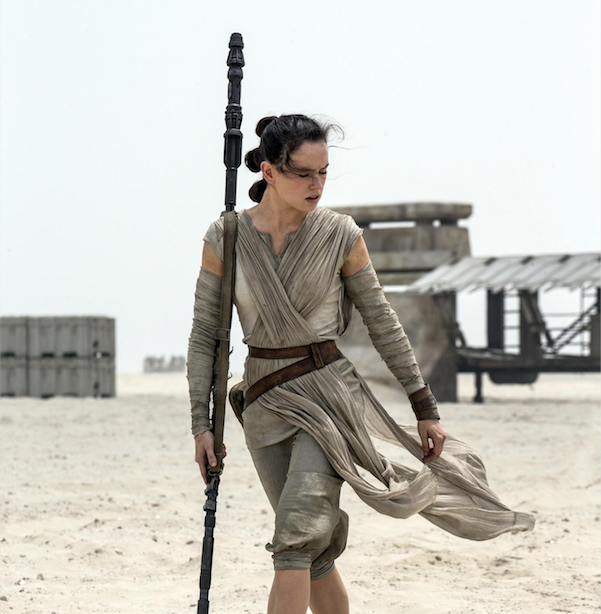
In Star Wars: The Force Awakens,
we’re introduced to Rey in a four-minute sequence. We understand everything we need to know about Rey without her saying a word.
So, what are these visual beats and what do they teach us?
Rey’s “Job”: We see her working as a scavenger and her challenges
Humanity: We first follow a masked figure until the mask is removed revealing a young female. A thirsty human struggling in a harsh environment. It’s subtle, but the subtext here is that there’s a softness beneath her hardened exterior
Solitude: A simple wide shot of Rey traveling across the desert, showing how alone she is. This emotional beat is also addressed later in the sequence when we see the tally marks in Rey’s home counting how long she’s been isolated
Fear: One of my favorite examples of “show, don’t tell.” Rey cleans her scrap and looks up to see an old woman doing the same thing. In a simple look, we learn that Rey worries that she’s going to be stuck on that planet forever. That she’s going to become a product of her environment, much like the old woman. It establishes this internal fear in just a look. Brilliant, isn’t it?
Innocence: Whether it’s the childlike way Rey slides down the sand dune, the homemade doll in her room, or how she playfully wears the pilot helmet while eating dinner, this sequence is full of visual cues that establish an emotional connection. One thing is clear, this is a young girl just before her journey to become a young woman
“Show, don’t tell” is important throughout a script, but it’s vital in establishing a protagonist and engaging the audience with their emotional journey. What are some of your favorite examples of this rule? Pertaining to act 1? How important do you think visual storytelling is to establish an emotional connection between your characters and the audience? Share your thoughts below!
[A production coordinator working in Indie Horror, Rob Clarke is a screenwriter and reader determined to help other writers improve their work. You can listen to him every week on his podcast, the Upside Fans, where he dissects Fandom and Pop Culture from a positive point of view.] @JurassiClarke



0 Comments
No comments yet. Be the first to share your thoughts!
Leave a Comment